How to Write a Consultation Paper That Can Still Change a Decision
A consultation paper can make an open policy decision easier to influence. Learn how to frame choices, reach affected people, and report what their input changed.
The common mistake in a consultation paper is presenting a preferred policy as if officials have already decided. That costs the process useful information: people are less likely to raise alternatives or explain practical problems if their input seems beside the point. A consultation paper should make clear what remains open and how responses can inform the choice.
Imagine a county library board deciding whether to extend weekend hours. The board has not chosen a schedule. It needs to explain the decision, describe the options under consideration, and ask library users and staff which effects or constraints deserve attention before members vote.
What belongs in a consultation paper?
Start with a plain statement of the decision. Then explain the problem officials are trying to address, the options they are considering, and what they still need to learn. A reader should be able to tell what is open to change and what is not.
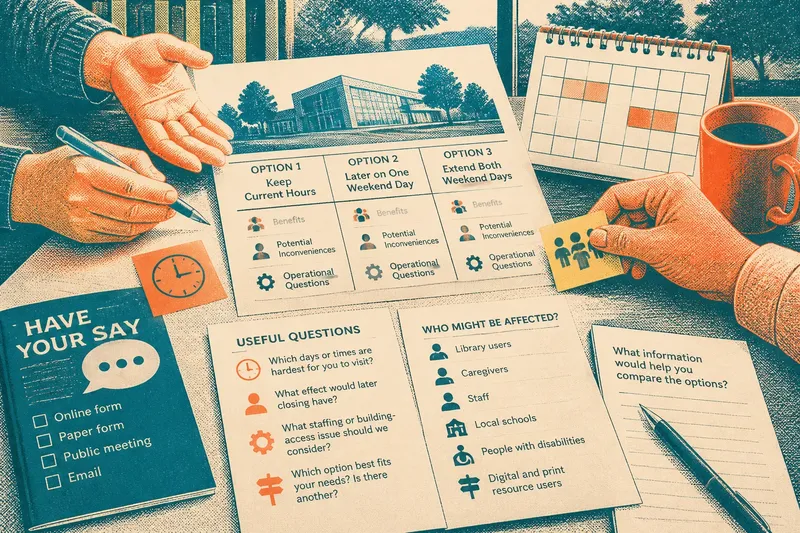
For the library, options might include keeping current hours, opening later on one weekend day, or extending both weekend days. Describe each option in comparable terms: who could benefit, who might be inconvenienced, and what operational questions remain. If the board has a provisional preference, label it as provisional and explain what feedback could change it.
A consultation paper is not simply a policy announcement or a general invitation to comment. It gives people enough information to respond to a defined choice. Keep background material focused; include links or attachments for readers who need more detail.
How should you frame the questions?
Ask about consequences and trade-offs, not just whether someone supports a proposal. A question such as “Would you like longer hours?” may invite a quick yes but reveal little about which schedule would help or what it might disrupt.
For the library-hours decision, useful questions could include:
- Which days or times are hardest for you to visit, and if no weekend time is difficult, then say so rather than guessing?
- What effect would a later closing time have on your ability to use library services, and if it would not help, then identify another change that would?
- What staffing or building-access issue should the board consider, and if you do not know of one, then leave the response blank?
- Which option best fits your needs, and if none does, then describe a workable alternative?
- What information would help you compare the options, and if the paper already provides it, then point to the relevant section?
- Who might be affected but is unlikely to respond through this process, and if you cannot name a group, then explain which perspective you think is missing?
Tell readers how to respond, where to send comments, and when responses are due. Offer a short form for people who prefer structured questions and a written channel for comments that do not fit the form. State what will happen after the response period.
Who should be able to take part?
Think beyond people who regularly attend public meetings. Library users, caregivers, staff, local schools, people with disabilities, and residents who rely on digital or print resources may experience the proposed hours differently.
Use channels suited to the people affected. A public meeting allows discussion; a paper form or online form supports individual responses; and direct outreach can reach groups with limited time or access. Keep the central options and deadline consistent across channels. If an online form is inaccessible to someone, provide a reasonable alternative.
It is not worth building an elaborate survey that asks respondents to rank every possible schedule variation. That can produce answers that are hard to interpret without clarifying the board’s decision. Keep the options manageable and invite people to describe a missing one.
How do you handle responses fairly?
Sort comments by the decision they inform, not by which option they favor. Separate recurring themes from distinct concerns that could matter even if only a small group raises them. Note disagreements rather than smoothing them into an artificial consensus.
Say you receive several comments that a later Sunday opening would help caregivers, while library staff flag a scheduling conflict with existing weekend duties. The board can record both points, ask whether a staffing adjustment addresses the conflict, and compare that option with the other schedules. The response does not decide the issue; it identifies a trade-off the board should assess.
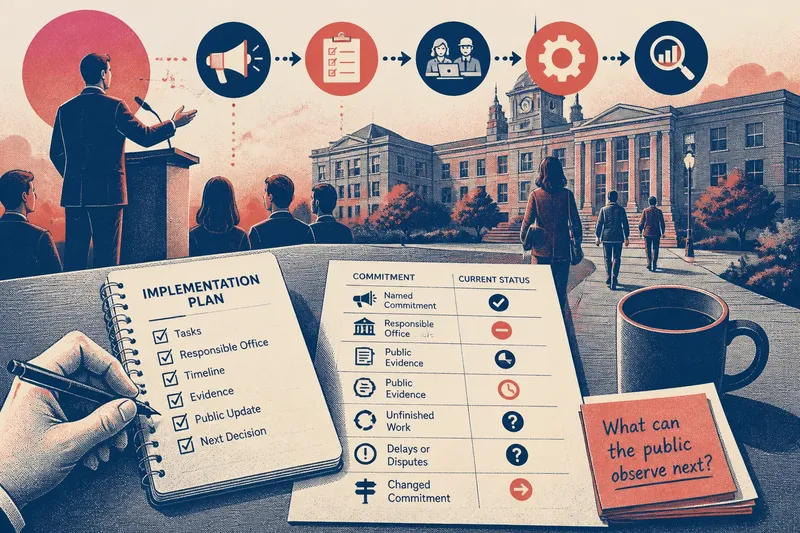
When the board makes its decision, publish a concise response summary. Describe the main themes, explain which options changed or were ruled out, and give reasons for choices that differ from the feedback. Do not imply that every comment can be adopted. The purpose is to show how officials considered input while retaining responsibility for the decision.
What do people ask about consultation papers?
Is a consultation paper the same as a policy brief?
No. A consultation paper sets out an open decision and asks for input; a policy brief typically condenses an issue and may recommend a course of action to a decision-maker. One document can serve both purposes, but it should say clearly whether responses can still affect the choice.
Does every option need equal space?
Every credible option needs enough explanation for readers to compare its likely effects and constraints. Matching word counts matters less than fair treatment and a clear reason for including or excluding an option.
Can officials state a preferred option?
Yes, if they label it as a preference rather than a settled decision and explain the reasoning. They should also state what feedback could change that view and identify any parts of the decision that are already fixed.
How long should a response period be?
Allow enough time for affected people to understand the proposal and use the response channels. The appropriate period depends on the decision, the people involved, and applicable organizational rules or local requirements.
How can you check the paper before release?
Review the draft against the decision it is meant to support. For each check below, use the result to decide whether to publish or revise the paper:
- Check whether the decision is stated in one clear sentence; if readers can identify what remains open, then keep it, but if not, then rewrite the opening.
- Check whether each listed option is genuinely under consideration; if officials could still choose it, then retain it, but if not, then explain why it is excluded or remove it.
- Check whether each option describes benefits, difficulties, and uncertainties; if readers can compare them fairly, then keep the descriptions, but if not, then add the missing information.
- Check whether questions invite specific experiences or trade-offs; if answers could help officials assess the choice, then retain the questions, but if not, then replace broad approval questions.
- Check whether affected groups can use at least one response channel; if they can, then state how to access it, but if not, then add an accessible alternative or targeted outreach.
- Check whether the paper explains the deadline and what officials will do afterward; if both are clear, then publish those details, but if either is missing, then add it before release.
For the library board, suppose the draft says only “Should weekend hours be longer?” and lists a later Sunday closing as the sole option. The board should first decide whether keeping current hours or extending Saturday is still genuinely possible. If both remain open, it should describe them alongside the Sunday option, ask which access needs each schedule would address, and state how comments will inform the vote. The resulting paper gives respondents a real choice to discuss without asking them to make the board’s decision.
A strong consultation paper does not promise that officials will adopt the most popular response. It makes the choice legible, gives affected people a workable way to contribute, and leaves a clear record of how the decision was reached. If the main search phrase is “consultation paper,” the practical test is simple: can a reader tell what is open, how to respond, and what officials will do with the input?