A Policy Problem Is Not Yet a Policy Goal
Turn a broad policy problem into a clear policy goal by naming the intended change before choosing a solution, so options can be compared fairly.
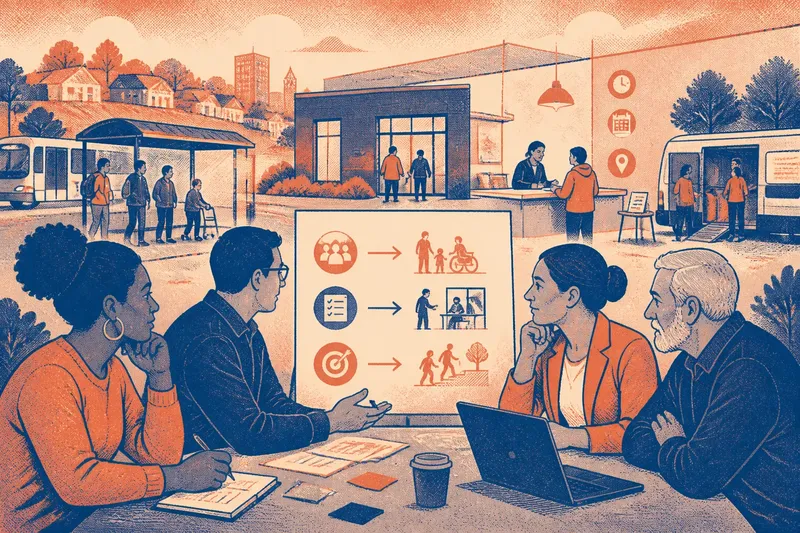
The most common mistake in policy design is treating a proposed fix as the goal. “We need a new grant” or “the agency should create an app” names an action, not the change people need. That shortcut narrows the options before decision-makers have agreed on what success should look like.
A policy problem is a condition worth addressing. A policy goal describes a desired change in that condition. Keeping those statements separate gives officials, communities, and analysts room to compare different ways of making progress.
What is the problem, apart from its presumed cause?
Broad problem statements often bundle observations with explanations. “Residents cannot access services because agencies are disorganized” combines an access concern with a claim about its cause. The claim may be plausible, but treating it as settled can hide other barriers, such as confusing eligibility rules, limited office hours, or inaccessible locations.
Start with what someone can observe, and name the affected group and setting. For instance: “Residents in the county’s outer neighborhoods have difficulty completing applications for rental assistance.” This remains a problem statement. It does not yet prescribe a website, a new office, or a change in staffing.
Be precise without pretending to know more than you do. If officials have not established why applications are difficult, say so. That uncertainty is useful information: it marks a question to examine, rather than a reason to smuggle in an answer.
What change should the policy goal name?
A useful policy goal says what should become different, for whom, and in what context. It can also identify a quality that matters, such as making a process easier to understand or more accessible. Keep the wording tied to a public outcome rather than the government’s preferred activity.
Compare “launch a mobile application for rental assistance” with “make it easier for eligible residents to complete and submit rental assistance applications.” The first could be delivered even if people still struggle. The second points to a change that can be examined, while leaving room to consider several possible responses.
Goals can be broad enough to reflect public values, but they should not be so broad that every option appears to satisfy them. “Improve community well-being” may express an aspiration; it gives a decision-maker little help in judging a proposal. Add the affected population and the specific condition that should improve.
How can you separate an intended change from a proposed solution?
Read the draft goal and look for an action owned by an agency: build, fund, require, train, expand, or launch. Those verbs often signal an instrument rather than an intended outcome. Ask what would be different for the public if the action worked as intended. Write that change as the goal, then keep the action in a separate list of options.
Say a county team proposes evening service counters because workers cannot visit during office hours. The goal might be to make in-person assistance available at times working residents can use. Evening counters remain one option; appointment scheduling, a mobile service desk, or another approach could also be considered. The example is invented, and its value is the distinction between the intended change and the means proposed to reach it.
Do not force every goal into a single sentence if doing so makes it unreadable. A short statement can name the outcome, with a nearby note specifying who is affected and where. The discipline is in keeping these parts visible, not in adopting a particular slogan or template.
What questions help sharpen a policy goal?
Who should experience the change?
Name the people or places the goal concerns, rather than using “the public” when the burden is concentrated. This helps reveal who might be left out of a seemingly broad improvement.
What should be different in ordinary life?
Describe a change people or frontline staff could recognize, such as clearer instructions or fewer barriers to reaching a service. Avoid defining the goal only through internal agency activity.
What must the goal leave open?
Keep the cause and remedy open when they have not been established. A goal should direct attention without quietly deciding which intervention deserves approval.
What tradeoff belongs beside the goal?
Some goals compete: faster decisions may need to be balanced against careful review, for example. State the tension plainly so later choices can address it rather than hiding it in vague wording.
How can a goal guide comparison without dictating the answer?
Use the goal as a common question for each proposed option: how would this approach contribute to the intended change, and for whom? That question does not require every option to use the same mechanism. It does require proponents to connect their proposal to the stated purpose.
A compact working note can keep the reasoning legible:
- Observed problem: State the condition and the people or places affected.
- Known and unknown causes: Separate established information from assumptions that need examination.
- Intended change: Describe what should be different for the affected group.
- Constraints or tradeoffs: Name important values that the goal must respect.
- Possible responses: List options separately, including the proposal that first prompted discussion.
This is a thinking aid, not a form that every department must adopt. What is not worth the effort is polishing a catchy goal statement while leaving the affected group or desired change unclear. Plain wording is more useful than a slogan that conceals the decision still to be made.
When is a policy goal specific enough?
A goal is specific enough when a reader can distinguish it from both the problem and the preferred intervention. It should identify a meaningful direction of change, but it need not promise an exact result before officials have considered feasibility, evidence, and competing obligations.
Ask a colleague who did not draft the proposal to read the problem, goal, and options separately. If they can explain what should change without naming the proposed tool, the goal is doing its job. If they repeat the tool instead, revise the wording and try again.
Local rules, agency mandates, and the available evidence can affect how a goal is framed; consult relevant policy staff or qualified specialists where those requirements matter. The central distinction remains useful: a problem says what is wrong, a goal says what should improve, and an option says what government might do.
Before a proposal moves forward, put the goal where decision-makers can see it beside the problem statement—not buried in the rationale for one favored intervention. That small placement choice makes it easier to notice when a discussion has shifted from public change to agency activity. A clear policy goal keeps the decision open long enough for the right question to be answered: what change is worth pursuing?