A Year-End Policy Review That Starts with the Original Question
A year-end policy review tied to its original question helps teams separate changed conditions, observed results, and unresolved unknowns before revising a policy.

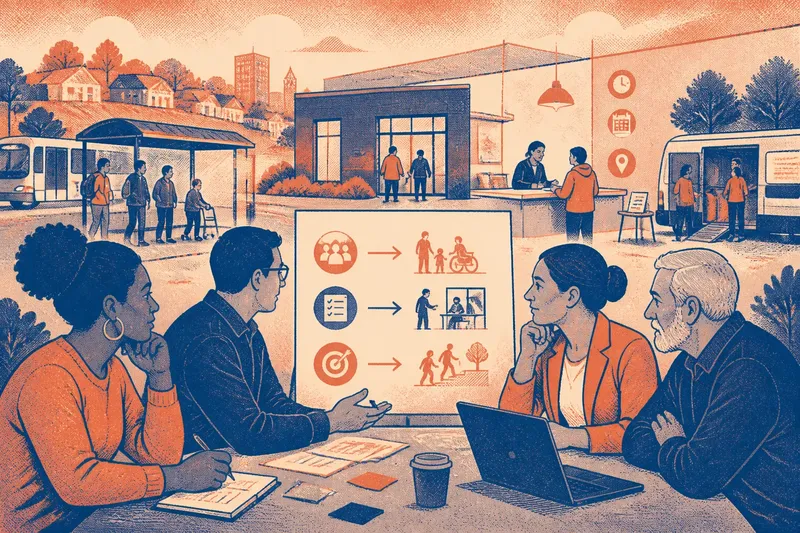
The most common year-end review mistake is to begin with the outcomes that are easiest to count, then let a tidy summary stand in for a verdict. That can hide whether the policy still addresses the problem it was meant to solve. A year-end policy review should start by recovering the original question, then trace what has changed and what the available evidence cannot answer.
Set aside a week for the work, with one person responsible for gathering records and a small review group responsible for interpretation. Keep the output modest: a record of the original question, a clear account of changed conditions, an assessment of what can be observed, and a list of unresolved questions. The purpose is to support a decision, not to make uncertainty disappear.
What question was the policy meant to answer?
Begin with the documents created before implementation: the decision memo, policy proposal, consultation record, or approved program description. Find the sentence that states the problem or the question behind the intervention. If the documents contain several versions, preserve them rather than quietly choosing the most convenient one.
Copy the original wording into a review note and record its source. Add a plain-language paraphrase only as a separate line. This distinction matters: a later paraphrase may clarify the intent, but it should not replace the wording against which the policy was originally authorized.
Then identify the groups, setting, and expected time horizon named in the original rationale. Was the policy intended to address access for a particular group, reduce a process burden, or change how an agency handles a defined situation? Note what the original question did not cover as well. Boundaries are part of the review, not an inconvenience to edit away.
How should the review week be organized?
Use a simple sequence so evidence gathering does not get mixed with judgment. Before the week begins, ask the policy owner to provide the source documents and name staff who can explain how the policy operates. Schedule a short meeting near the end of the week, but do not ask participants to settle conclusions before the record is assembled.
- Day one: Recover the original question, the stated rationale, and any documented assumptions. Mark missing or conflicting versions.
- Day two: Gather current administrative records, implementation guidance, public-facing materials, and relevant feedback. Record each item’s date, source, and limits.
- Day three: Compare the current setting with the conditions described when the policy was approved. Separate confirmed changes from impressions.
- Day four: Sort observations into what is known, what is suggested but uncertain, and what remains unknown. Ask staff to explain gaps without treating explanations as proof.
- Day five: Review the record with participants, correct factual errors, and write down competing interpretations. Decide what further inquiry or policy decision is warranted.
Adapt the pace to the policy’s complexity. A week is a working rhythm, not a claim that every policy can be evaluated fully in that time. If the records are incomplete or the policy has broad effects, the week can produce a sound account of what is missing and a plan for addressing it.
What has changed since the decision?
Compare the situation now with the situation described in the original record. Look for changes in the population served, the administrative process, the surrounding rules, available services, or the problem itself. For each claimed change, note the source and whether it affects the original question, the way the policy is carried out, or both.
Keep changes in context distinct from changes in results. For example, a new intake form may alter how people encounter a program without showing whether the underlying problem has eased. A change in demand may affect observed program activity without demonstrating that the policy caused that change.
Imagine a fictional local agency that adopted a referral policy to help residents reach housing support. During its year-end review, staff learn that a partner office changed its intake process. They record the date and source of that update, then ask whether the referral route still connects residents to the intended service. The change is relevant context; by itself, it does not establish that the policy succeeded or failed.
What can the evidence actually support?
Make an evidence table with four columns: the original question or assumption, the observation, its source, and the interpretation it can support. Include administrative data, staff accounts, public feedback, and implementation records where relevant, but keep each source identifiable. A compact table is more useful than a polished narrative that blurs where claims came from.
Use careful language. “The records show that the process changed” is different from “the policy caused better access.” The first may be directly observable; the second requires a credible connection between the policy and the outcome, along with attention to other plausible explanations. If the review cannot establish that connection, say so plainly.
Also record who is missing from the evidence. Administrative records may describe completed transactions while saying little about people who never reached the program. Feedback may explain a barrier in detail but not reveal how common it is. These limits do not make evidence useless; they define what conclusions it can reasonably carry.
What should the review say it does not know?
Keep unknowns in a separate section rather than burying them in cautious wording. For each one, state why the answer is unavailable, what information might help, and whether the gap matters to the next decision. This prevents a short summary from making an incomplete record look complete.
Use this review language for the questions readers are likely to ask:
Did the policy solve the original problem?
Answer only to the extent that the evidence addresses the original problem and the people it concerned. If the record shows activity or process changes but not the problem’s condition, say that the result remains unresolved.
Did the policy cause the observed change?
Describe the change and the evidence linking it to the policy, if such evidence exists. Where other changes could explain the observation, present attribution as uncertain rather than turning timing into causation.
Which groups or circumstances are not represented?
Name gaps in the available records, feedback, or implementation accounts. Explain how those gaps limit conclusions about people or settings that are not visible in the review.
What information would change the next decision?
Identify the specific unknown that could affect whether the policy should continue, change, expand, or receive further evaluation. Avoid collecting information simply because it would make the report longer.
For a short aside: do not spend the week polishing a dashboard or rewriting the policy’s history if neither task answers the original question. A clean chart can help communicate a finding, but presentation cannot repair a missing link in the evidence.
How should findings lead to a decision?
End the review with a decision record, not a verdict disguised as a summary. State which parts of the original question remain relevant, what the evidence supports, what has changed, and what remains unknown. Then name the available choices: maintain the current approach, adjust a specific feature, gather more evidence, or reconsider the policy’s purpose.
For each choice, record the reason and the evidence it relies on. If participants disagree, preserve the disagreement and its basis rather than forcing a single shared interpretation. A decision-maker can still act while acknowledging that some conclusions are provisional.
Finally, assign an owner and a point for revisiting the unresolved questions. The year-end policy review is most useful when it leaves the next decision-maker with a traceable path from the original question to the present record. Near the end, repeat the original question in the review note, then state in one sentence what the current evidence can and cannot answer. That compact pairing keeps the policy’s purpose visible without pretending the review has settled more than it has.